Tom Ford Belt Shipping Check
This guide addresses a specific problem: after discovering a [Tom Ford](https://fashion-reps.net/brand/tom-ford) belt in the fashion-reps catalog, how to verify product specifications, quantity, packaging dimensions, chargeable weight, declaration restrictions, and cost fields before submitting for international shipping. After reading, you should be able to compile a shipping dossier to review with a shopping agent or official customer service; if the product page, target route, or destination
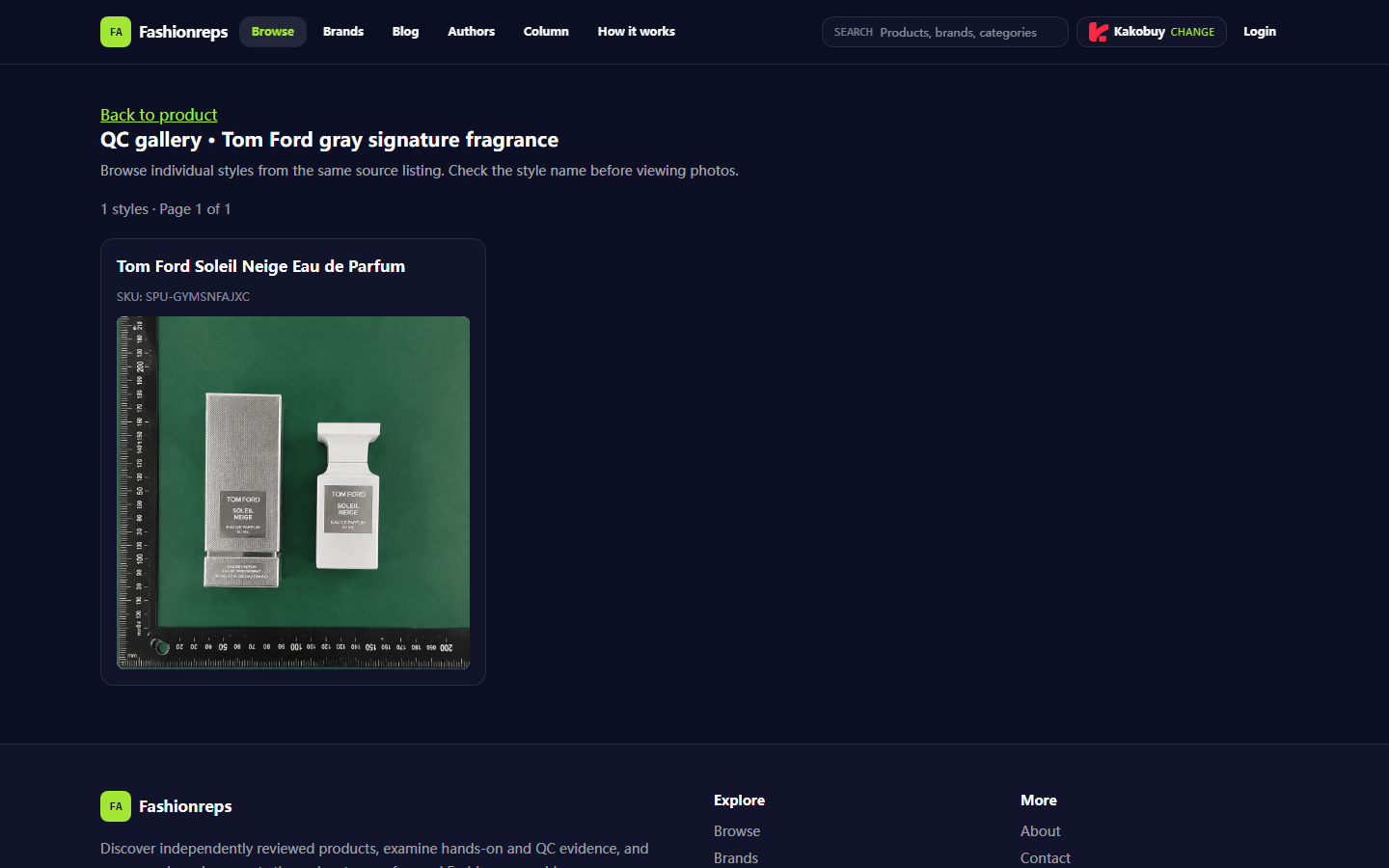
This guide addresses a specific problem: after discovering a Tom Ford belt in the fashion-reps catalog, how to verify product specifications, quantity, packaging dimensions, chargeable weight, declaration restrictions, and cost fields before submitting for international shipping. After reading, you should be able to compile a shipping dossier to review with a shopping agent or official customer service; if the product page, target route, or destination country rules are incomplete, pause estimation and do not fill in prices or weights based on assumptions. 📦
fashion-reps is primarily used for discovering products, viewing category information, and referencing QC materials. Ordering, payment, warehousing, consolidation, and international shipping are handled by an external shopping agent chosen by the user. Therefore, this article does not treat the catalog page as a carrier commitment, nor does it present page image observations as actual purchase, receipt, or trial experience.

Image: Illustration of the catalog and QC material entry points on the fashion-reps page. This image is intended solely to illustrate verification entry points and does not serve as independent proof of Tom Ford belt specifications, packaging, or shipping compliance.
Clarify the Verification Tasks Before International Shipping of Tom Ford Belts
Before submitting for shipping, break the problem into four verifiable parts:
- Does the product name, style, color, material description, and size corresponding to this belt come from the currently accessible product page?
- How many belts are actually in the order, and are gift boxes, buckle protectors, hang tags, or other accessories included?
- Who measures the packaged length, width, height, and chargeable weight, and have the measurements been entered into the warehouse or agent system?
- Does the destination country and target route accept belt-type products, and whose rules should be followed for declaration name, declared value, taxes, and restrictions?
Situations not applicable include: only search summaries, tab pages, or inaccessible pages; product name inconsistent with details; insufficient specification information on the page; agent has not provided target route rules; or warehouse has not completed inbound measurements. In such cases, record as pending confirmation rather than filling in a seemingly precise value. ⚠️
Confirm Product Specifications and Current Page Evidence from the fashion-reps Catalog
First save visible evidence from the product page, including product name, style name, SKU or page identifier, color, size options, material description, accessory notes, and page access time. Do not only record the broad name "Tom Ford belt," as the same brand may have different belt widths, buckles, leather finishes, and packaging forms.
If the page is from a collection or same-source product set, first confirm that you are viewing the specific style corresponding to the belt, not other products from the same source. Images, brand names, or style tags appearing on the page also cannot independently prove the product's material, authenticity, origin, or shipping eligibility.
It is recommended to save the following evidence separately:
- Product name and style shown on the product page.
- Color, size, and material information shown on the product page.
- Currently visible accessory or packaging notes.
- Whether the page is accessible normally, and whether there are redirects, empty pages, or only tag content.
- Query date, page status, and fields still needing confirmation from the agent.
If the page only displays images without clear product specifications, the images can only serve as an aid for style identification and cannot be used to infer belt length, thickness, weight, or packaging dimensions. 🔎
Record Quantity, Packaging Method, Dimensions, and Chargeable Weight Fields
Shipping documentation should record both the product state and the packaged state. The product's own dimensions are not equal to the package dimensions, and the bare weight is not equal to the chargeable weight adopted by the carrier. Belts may reduce length in one direction when coiled, but gift boxes, buckle protection, outer boxes, and fillers will change the final volume.
| Verification Item | Fields to Record | Handling When Current Information Is Insufficient |
|---|---|---|
| Product | Quantity, style, color, size, material description, accessories | Cross-check with current product page and order details; do not supplement on your own |
| Packaging | Whether to keep original box, protective sleeve, hang tag, outer packaging, and reinforcement materials | Ask warehouse if packaging can be removed or changed, and confirm if it affects after-sales |
| Dimensions | Package length, width, height, measurement unit, and measurement time | Based on warehouse actual measurement; do not calculate volumetric weight before measurement |
| Weight | Product weight, packaging weight, total weight, and chargeable weight type | Distinguish actual weight from volumetric weight; require agent to explain which is used |
| Shipping | Destination country, postal code, route name, restrictions, and surcharges | Have agent re-quote based on actual destination |
Quantity is especially important. Consolidating multiple belts may reduce repeated handling but may also increase package value, volume, or risk of loss; splitting may incur more fixed fees but may adapt to route restrictions or reduce single-package risk. Without warehouse measurements and route quotes, it should not be claimed that one method is definitely cheaper. 📐
Check Target Route Declaration and Shipping Restrictions for Belt-Type Products
First confirm the destination country, city, or postal code, then check the agent's current available route restrictions for the product. Different routes may have different requirements for leather goods, metal buckles, brand logos, gift-boxed items, or high declared value parcels. This article does not provide methods for under-declaring, splitting orders to avoid taxes, or evading inspection; declarations should truthfully reflect product category and actual transaction information, and comply with destination country import rules.
Confirm the following questions with the agent or carrier:
- Does the route accept belt-type products and their metal buckles?
- Are specific declaration names, material descriptions, or customs codes required?
- Are there restrictions on branded goods, leather products, or items with original packaging?
- Should the declared value be based on order amount, actual payment amount, or agent system rules?
- May destination country incur import taxes, customs clearance fees, remote area fees, or inspection-related charges?
- In the event of return, detention, additional taxes, or non-delivery, how are responsibilities and handling costs divided?
"Can create a parcel" does not mean "customs clearance risk has been confirmed." Final restrictions should be based on written or system confirmation from the agent and carrier under current date and destination conditions. 🌍
Separate Product, Packaging, Payment, and International Shipping Cost Information
Do not combine all costs into a single "shipping fee." At minimum, separate into product price, agent service fee, payment processing fee, warehousing or handling fee, packaging or reinforcement fee, international shipping fee, possible insurance fee, and destination country taxes or customs clearance fees. Each item should note currency and applicable conditions.
| Cost Category | What to Verify | What Not to Directly Infer |
|---|---|---|
| Product Price | Currency, quantity, and actual amount on product page or order | Do not infer current price from images, brand names, or old pages |
| Service & Handling | Agent service, inbound, inspection, consolidation, warehousing, and reinforcement fees | Do not treat free promotions as long-term policy |
| Payment | Payment channel, fees, exchange rate, and refund rules | Do not treat displayed exchange rate as final debit rate |
| International Shipping | Destination, route, package dimensions, actual or volumetric weight | Do not substitute quotes from other countries or old parcels |
| Taxes & Customs | Destination country taxes, customs clearance fees, additional taxes, and return conditions | Do not promise tax exemption, inspection exemption, or fixed delivered price |
If the platform or agent has not provided sufficient current figures, both the article and shipping records should retain "pending quote" status. This is easier to track than entering an unverified low price and avoids mistaking estimates for final costs before payment. 💳
Note Currency, Query Time, Data Date, and Pending Conditions
Every amount, dimension, and weight should be accompanied by a minimum record set: currency or unit, destination, data source, query time, applicable route, whether it is an estimate, and who finally confirms it. For example, the international shipping fee displayed in the agent backend only represents the route and package parameters selected at that time; once packaging method, postal code, or chargeable weight changes, the quote may also change.
It is recommended to use the following structure in shipping notes:
- Product: Tom Ford belt, fill in the specific style confirmed on the current page.
- Quantity: Fill in according to actual order quantity.
- Packaging: Choice of keeping or removing gift box, hang tag, and protective materials.
- Dimensions: Await warehouse actual measurement, note length, width, height, and unit.
- Weight: Record actual weight, volumetric weight, and chargeable weight adopted by system separately.
- Route: Fill in current route name and destination shown by agent.
- Amounts: Record product, service, payment, packaging, and international shipping in respective currencies.
- Time: Record query date and quote validity conditions.
- Pending: Route restrictions, declaration requirements, taxes, insurance, and return responsibility.
Do not copy quotes from old orders, other products, or other countries to the current package. Time-sensitive facts must be re-verified before submission, especially inventory, shipping costs, exchange rates, route availability, and destination country policies.
How to Stop Estimating and Verify with Official Support When Information Is Insufficient
Stop calculating total cost or promising shippability if any of the following occurs: product page cannot confirm specific style; warehouse has no actual measurements or weight; route does not clearly accept belt-type products; declaration requirements are vague; destination country tax rules are not stated; or system quote does not show billing basis.
When submitting questions to agent support, provide only the information needed to complete verification, and do not disclose full payment cards, passports, complete waybills, or irrelevant order details. You can request confirmation of: whether the product category can be shipped, which declaration fields are needed, whether packaging can be adjusted, whether actual or volumetric weight is used, what costs are included in the quote, and how exceptions are handled.
If support only replies "usually possible" or "based on system," still record the restrictions and reconfirm after warehouse completes measurements. Without clear route, destination, and package parameters, there is insufficient basis to output a specific shipping cost figure.
Tom Ford Belt Action Checklist Before Submitting Parcel
Complete item by item before submission:
- Confirm current fashion-reps product page is accessible and record specific style and query time.
- Cross-check product name, quantity, color, size, material description, and accessories against the order.
- Choose whether to keep gift box, protective sleeve, and other packaging, and confirm how this affects dimensions and weight.
- Obtain warehouse measured length, width, height, actual weight, and measurement time.
- Confirm whether agent uses actual weight or volumetric weight for billing.
- Check target route restrictions for belts, leather, and metal buckles based on actual destination.
- Separately record product price, service fee, payment fee, packaging fee, international shipping fee, and possible taxes.
- Note currency, query date, route, and validity conditions for each amount.
- Use truthful, explainable declaration information; do not adopt under-declaration or inspection evasion schemes.
- Pause submission when information is incomplete and verify with agent or carrier official support.
Whether consolidation saves costs must be compared using the same destination, same billing rules, and warehouse actual data; it may reduce repeated first weight or handling costs, but may also increase volumetric weight, package value, and single loss risk. Splitting may increase fixed fees but is more suitable when route restrictions, risk diversification, or package size limitations apply. Suitable for buyers who pursue orderly processes, have larger quantities, and have confirmed route rules; not suitable for those lacking actual measurements, unable to confirm declaration requirements, or unable to accept the risk of concentrated loss in one package.
Frequently Asked Questions About Agent Platform Shopping
1. What kinds of products can I browse in the spreadsheet on yupoo.tips?
The spreadsheet provided by yupoo.tips includes shoes, clothing, bags, accessories, sweatshirts, perfumes, hats, scarves, belts, and various household daily necessities.
By Maya Reynolds
Maya ReynoldsMaya Reynolds is Editor-in-Chief, covering portable cooling, USB power delivery, small-appliance teardown, and editorial standards. They maintain the site's airflow test rig and set the desk's testing calendar. Every score is checked against the raw data, and Maya conducts the final side-by-side comparison. They also handle corrections and updates, connecting the maintenance of testing equipment and score checks with the continuing editorial work on published reviews.Editor score 4.2 / 5